Featured Blueprint
The 6.5-Step Blueprint to Scale B2B Tech
In short
- Scale B2B tech by working through 6.5 steps in order: business model, ICP, content, website, analytics, social and CRM.
- Use the Business Model Canvas to align value propositions, customer segments, channels, revenue streams, partnerships and costs.
- Revisit your ICP quarterly using product usage, churn patterns and market feedback.
Last changed by Business To Nexus · 10 February 2026 · Last updated
in the Nordics
and beyond
Scaling a B2B tech startup isn't about doing everything — it's about doing the right things in the right order.
01
1. How Do You Design a B2B Business Model That Actually Works?
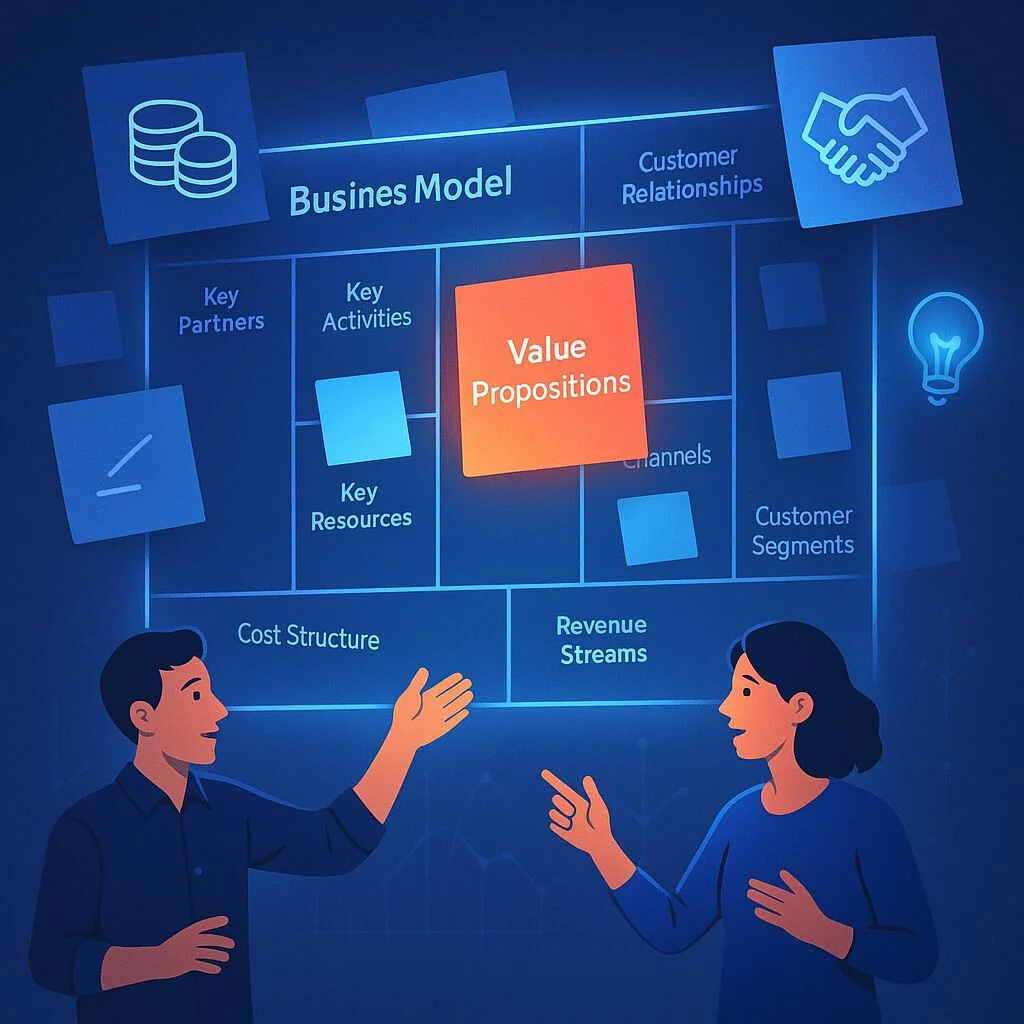
A working B2B business model uses the Business Model Canvas to align value creation, delivery, and capture around your Ideal Customer Profile — turning innovation into sustainable, repeatable growth.
It's the foundation of your venture — how you create, deliver, and capture value in a way that aligns with your Ideal Customer Profile (ICP) and adapts to real market conditions. It's not just about making money — it's about making sense.
Why It Matters
Strong technology or design alone can't fuel growth. A solid business model turns innovation into sustainability. Without a clear, repeatable way to generate value and revenue, even the best ideas hit a wall.
How to Build It Right — Use the Business Model Canvas (BMC)
- Value Propositions Go beyond surface-level benefits. Clearly define what problem you solve, for whom, and why your solution is meaningfully better. Make it deeply relevant to your ICP — not a one-size-fits-all pitch. The sharper the fit, the stronger the pull.
- Customer Segments Identify your high-priority users — the ones who drive early traction and long-term revenue. Group them by behavior, needs, and potential for expansion. Don't try to serve everyone; serve the right ones really well.
- Channels Choose the touchpoints where your users already seek solutions or build trust — whether that's direct sales, partnerships, content, or community. Your channel strategy should reduce friction, not just broaden reach.
- Revenue Streams Think about how your customers prefer to pay — and how your product justifies that model. Subscriptions create predictability, usage-based pricing allows flexibility, and enterprise licensing supports scale. Match the model to the buying context.
- Partnerships Leverage strategic allies — co-sell partners, API integrators, or ecosystem collaborators — to unlock new markets or reduce acquisition costs. The right partnerships help you move faster without building everything yourself.
- Cost Structure Understand your true unit economics — what it costs to acquire, serve, and retain customers. Build models that scale efficiently and identify which costs are fixed versus variable to optimize for sustainable growth.
Common Pitfalls to Avoid
- Overcomplicated Pricing: Confusing plans and unclear value tiers can drive users away. Keep it simple, transparent, and tied to outcomes that matter.
- Poor CAC/LTV Economics: If it costs more to acquire a user than they're worth over time, your model won't sustain. Fix the funnel or shift the offer — early.
- Designing for Investors, Not Users: Don't fall into the trap of making your model look impressive on pitch decks but impractical in the real world. Always optimize for the user experience first.
Pro Tip: Your business model should evolve with your product. Treat it like a living blueprint — test, refine, and adapt as you learn more about your market and users.
02
2. How Do You Define Your Ideal Customer Profile (ICP)?
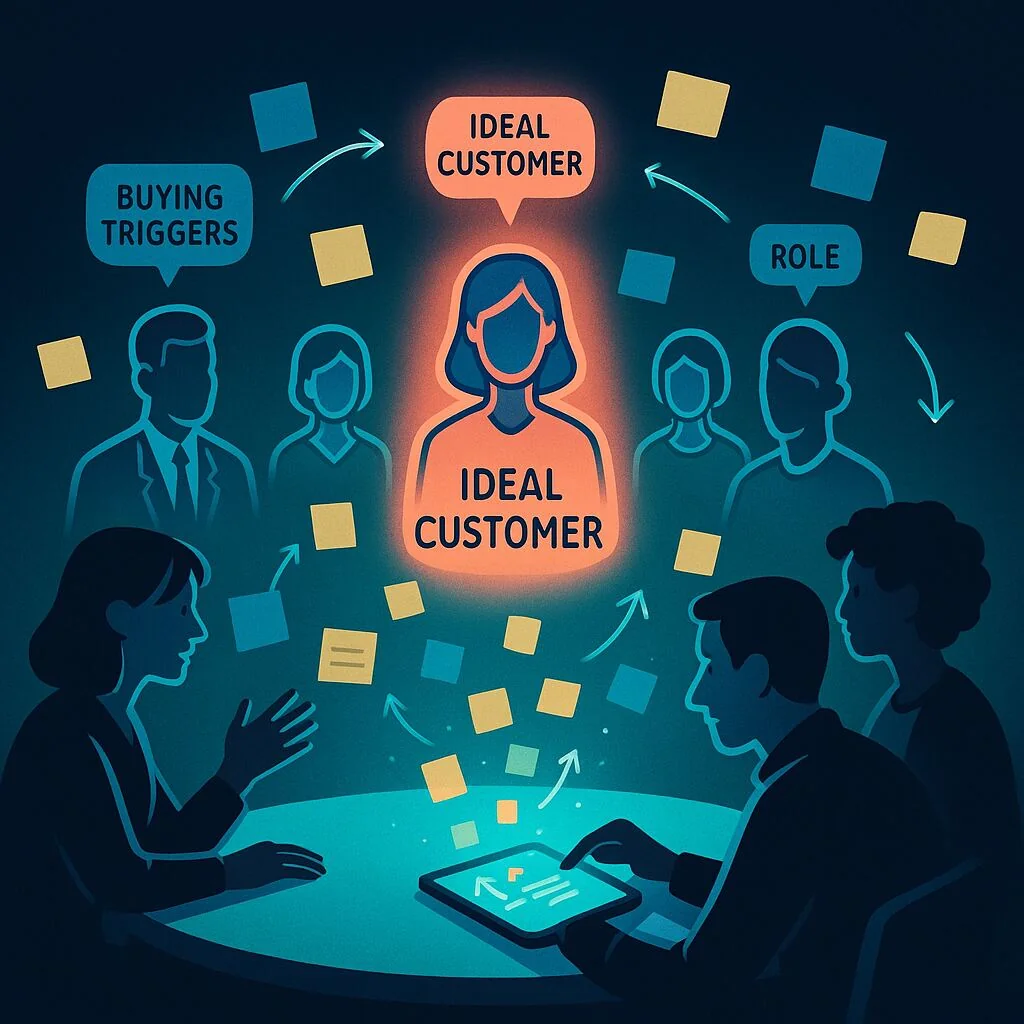
Define your ICP by validating real pain points, identifying buying triggers, mapping decision committees, and adapting to regional context — then revisit quarterly to stay relevant.
An Ideal Customer Profile (ICP) defines the kind of customer your product is built to serve best — the ones who find the most value, stay the longest, and advocate for you. It's not just demographics or firmographics — it's behavioral insight grounded in reality.
Why It Matters
Without clarity on your ICP, you end up building features for everyone and resonating with no one. Guesswork leads to vague messaging, inefficient outreach, and misaligned growth. A well-defined ICP brings focus to your product, marketing, and partnerships.
How to Shape a Real ICP
- Validate Real Pain Points Go beyond surface problems. Talk to users, understand what genuinely frustrates them, and spot patterns. Your product should be a response to lived pain — not imagined ones.
- Identify Buying Triggers Look for signals that make a customer ready to act. This could be internal shifts (team growth, tech stack changes) or external forces (regulations, new funding). Timing matters as much as fit.
- Understand Decision Committees B2B buying rarely rests on one person. Map out who influences decisions, who holds the budget, and who gets impacted. Each has different concerns — your messaging should reflect that.
- Map Channel Preferences Know where your ICP learns, connects, and builds trust. It might be LinkedIn, closed Slack communities, niche newsletters, or regional meetups. Be present where they already are — not where you wish they were.
- Adapt to Regional Nuance Job titles don't travel well. A CTO in Oslo may be hands-on with engineering; an ops lead in Berlin might drive all tech purchases. Don't assume — local context matters.
- Track Customer Journey Stages Document how your ICP moves from awareness to purchase. Understanding their evaluation process helps you create content and touchpoints that guide them naturally toward your solution.
Common Pitfalls to Avoid
- Personas That Are Too Broad or Aspirational: Describing your ideal user as "tech-savvy decision-makers" or "innovators" is vague. Narrow it down to specifics: industry, stage, behavior, buying context.
- Skipping Direct Conversations: Desk research only goes so far. Talk to real users — early, often, and with curiosity. Insight lives in unscripted conversations.
- Ignoring Cultural and Contextual Differences: What resonates in one market may flop in another. Don't copy-paste personas across geographies.
Pro Tip: Your ICP isn't static. Revisit it quarterly to update based on product usage, churn patterns, and market feedback. Staying current keeps you relevant.
03
3. How Do You Create B2B Content That Actually Gets Remembered?
Memorable B2B content has a clear point of view, solves one specific pain point, repurposes across formats, and uses storytelling over specs — designed for how people actually read.
It's content that resonates. The kind people pause for, remember, and maybe even share. Not filler. Not noise. It solves real problems, reflects your voice, and tells a story that sticks.

Why It Matters
Just because your audience is professional doesn't mean they want bland. Content that's thoughtful, clear, and human builds trust, familiarity, and lasting impressions — well before any formal conversation ever happens.
How to Do It Right
- Have a Point of View Say something real. Avoid the middle-of-the-road takes. Thoughtful opinions — even gentle ones — are far more memorable than polished neutrality.
- Be Genuinely Useful Focus on solving one specific pain point at a time. Clarity beats comprehensiveness. If someone finishes your content with a "that helped," you've done it right.
- Repurpose Smartly A single idea shouldn't live in just one format. Break it into snackable pieces: turn a webinar into short clips, quotes, a carousel, and a follow-up blog.
- Think in Stories, Not Specs Facts don't stick — stories do. Use structure, emotion, and real-world context to make your message land. Narratives are how people remember what matters.
- Design for How People Read Make it easy to scroll. Use headers, short paragraphs, visuals, and space. You're not just writing content — you're designing an experience.
- Test and Iterate Based on Response Monitor engagement patterns and feedback. What resonates? What falls flat? Use data to refine your voice and topics, but stay true to your authentic perspective.
Quiet Goal
Create the kind of content that feels familiar before anyone ever hits "contact."
04
4. What Makes a B2B Startup Website Actually Convert?
A converting B2B website prioritises clarity over cleverness, puts value above the fold, uses intentional CTAs, is mobile-first and fast, and includes trust signals — all built for continuous learning.
A good website does more than look polished — it communicates clearly, builds trust quickly, and helps visitors find what they came for. It works as your digital front door — quietly doing the job of informing, guiding, and reassuring.

Why It Matters
A beautiful website that doesn't explain what your product or service is in the first few seconds is just digital wallpaper. Especially in early stages, your website is often the first — and sometimes only — place people interact with your brand. Make that moment count.
How to Do It Right
- Choose Clarity Over Cleverness Avoid jargon or vague taglines. Clearly state what you do, who it's for, and why it matters — right at the top. If someone has to guess, they'll bounce.
- Show Your Value Above the Fold The top section of your homepage should feature your core message, proof of credibility (like testimonials or trusted clients), and a clear next step. Don't bury the important stuff.
- Use Intentional Calls to Action (CTAs) Use CTAs that reflect user intent — like "Try It Out," "Get the Guide," or "See How It Works." Be specific about what's on the other side of the click.
- Build Mobile-First and Fast Your site should feel smooth on smaller screens — clean layouts, fast load times, and no awkward buttons. Most users will be browsing on the move.
- Build for Learning Set up basic analytics and SEO tools early. This isn't about tracking every move — it's about understanding what's working and making thoughtful improvements.
- Add Trust Signals and Social Proof Include customer testimonials, case studies, or logos of trusted clients. Social proof reduces friction and builds confidence in your solution before the first conversation.
Small Shifts, Big Results
These small changes — grounded in clarity and usability — can help your website better support your goals, whether that's sharing knowledge, building community, or sparking meaningful interest.
05
5. How Should B2B Startups Set Up Analytics From Day One?
Set up analytics by tracking key events beyond pageviews, defining goal funnels, using UTM parameters, building focused dashboards, connecting to your CRM, and implementing multi-touch attribution.
It's not just about installing Google Analytics (GA). It's about configuring your tools to capture meaningful signals — how people discover you, what they interact with, and where they drop off.

Why It Matters
Without proper tracking, you're working on instinct, not insight. A thoughtful analytics setup helps you understand what's working, what's not, and where to focus next — from marketing to product. It's not about reporting; it's about real-time awareness.
How to Set It Up Intentionally
- Track Key Events Go beyond pageviews. Track form fills, button clicks, downloads, video views — anything that signals interest or intent. This helps you understand user behavior at key points in their journey.
- Set Up Goal Funnels Map the steps users take toward meaningful actions. A well-defined funnel helps you spot exactly where interest fades, so you can fix leaks or friction points.
- Use UTM Parameters Everywhere Tag every campaign link — whether it's from email, social, or ads — with UTMs. This gives you visibility into which channels and messages actually drive traffic and engagement.
- Build Focused Dashboards One-size-fits-all reports rarely help. Tailor dashboards for different teams — founders may want acquisition insights; product teams need behavior flow.
- Connect to Your CRM Integrating GA with your CRM or customer database helps you trace a user journey from first touch to final outcome. This is where analytics starts to inform strategy — not just summarize it.
- Set Up Attribution Models Understand how different touchpoints contribute to conversions. Multi-touch attribution helps you allocate resources to the channels and campaigns that truly drive results.
Mindset Shift
Analytics isn't a report card. It's a revenue radar — helping you detect early patterns, test assumptions, and make smarter calls. Not every click turns into a customer, but every customer journey leaves a trail. Follow it.
6.5
6.5 What CRM Setup Do B2B Startups Actually Need?
B2B startups need a CRM that automates lead capture, defines lifecycle stages clearly, prioritises pipeline visibility, auto-logs activities, enables team collaboration, and integrates with existing tools.
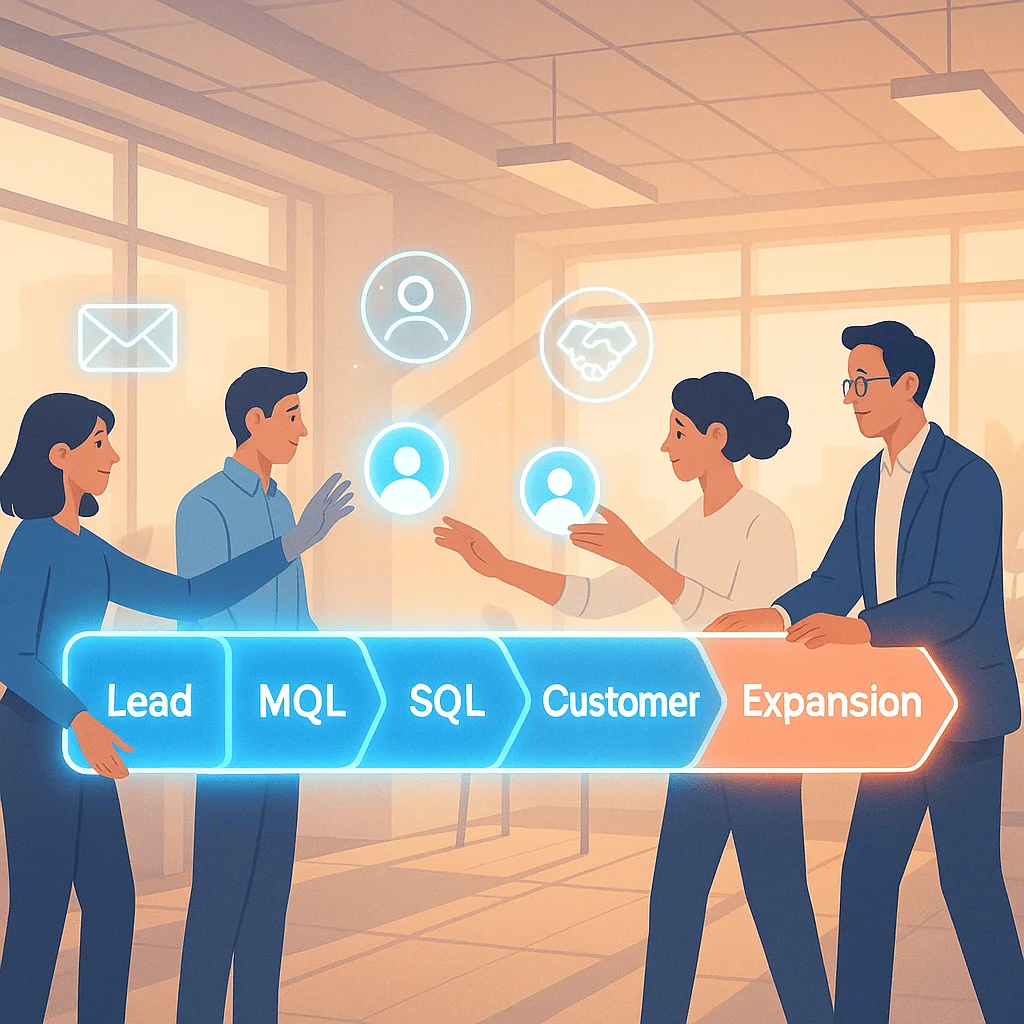
A good CRM isn't just a contact database or a sales tracker. It's your operational backbone — helping you understand relationships, coordinate team actions, and track progress across the customer journey without becoming admin overhead.
Why It Matters
Most CRMs end up as abandoned tools or cluttered spreadsheets. But when thoughtfully set up, a CRM becomes your shared source of truth — across marketing, sales, customer success, and even product feedback loops.
How to Do It Right
- Automate Lead Capture Don't rely on manual entry. Sync leads automatically from forms, events, webinars, or LinkedIn interactions so nothing falls through the cracks.
- Define Lifecycle Stages Clearly Map out your relationship flow — from Lead to Marketing Qualified Lead (MQL) to Sales Qualified Lead (SQL) to Customer to Expansion. This creates alignment across your team and clarity in your pipeline.
- Prioritize Pipeline Visibility A good CRM shows where things are slowing down — whether it's follow-ups, approvals, or decision timelines. The goal is to spot friction early, not after it stalls deals or conversations.
- Auto-Log Key Activities Ensure that emails, meetings, calls, and notes are captured centrally — not buried in inboxes or scattered tools. This gives everyone shared context and reduces repeated outreach.
- Enable Team Collaboration Set permissions and workflows that allow marketing, sales, and customer success to work from the same data. Shared visibility prevents duplicated efforts and missed opportunities.
- Integrate with Other Tools Connect your CRM with email platforms, calendar tools, and analytics systems. Integration reduces manual work and creates a complete view of customer interactions across all touchpoints.
Reality Check
A CRM isn't just a sales tool — it's your go-to-market operating system. When it reflects your real-world motion, it unlocks better decisions, better collaboration, and better outcomes.
Final Word: Scaling Smart Is A Journey With A Unique Sequence, Not a Sprint
Build Less, But Build It Right
Forget the chaos of chasing everything, everywhere, all at once. You don't need ten playbooks or twenty tools — you need one tight system that works.
These 6.5 foundational moves aren't random tactics — they're the digital groundwork that turns early-stage chaos into structured, scalable momentum:
- Clear Website That earns trust in seconds — not minutes.
- Business Model That doesn't leak revenue — aligned with how your real users pay and grow.
- Ideal Customer Profile That's not a guess, but a compass for every decision you make.
- Analytics That track reality, not vanity — giving you signal, not noise.
- Social Integration Where your audience actually lives, not just where trends are hot.
- CRM System That reflects how your team moves, so sales, marketing, and product aren't flying blind.
- 6.5. Content That actually gets remembered — because brand > blog, and people remember what made them feel something.
These aren't hacks. These are the fundamentals that compound over time — the kind that quietly power the brands that last.
From Startup to Scaleup to Standout
- You Don't Need to Do Everything You just need to do the right things
- In the Right Order And do them well
- This Isn't Just How You Grow It's how you grow with clarity, control, and compounding advantage
From startup to scaleup to standout —
by design, not by default.
Estimated reading time: 7–8 minutes
06
6. How Do You Build a B2B Social Media Presence That Drives Results?
Focus on platforms where your audience already spends time, install tracking tags thoughtfully, retarget with relevant content, show social proof on your site, and connect insights with your CRM.
It's about showing up — thoughtfully — on the platforms your ideal audience already uses. It's not just posting; it's listening, embedding, and tracking how people interact with your brand before they ever reach out.
Why It Matters
Trust is built well before anyone fills out a form or clicks "Contact." Social platforms like LinkedIn, X, or even Instagram are where curiosity begins. Done right, social integration gives you visibility, context, and a continuous feedback loop — without being pushy.
How to Do It Right
Quiet Advantage
Showing up socially — with clarity and care — keeps your brand top-of-mind before the inbox ever opens.